
Principles driving Toyo’s Tech
Everything You Need to Know About Injection Molding – The Foundation of Modern Manufacturing
It’s hard to imagine a world without plastic components. From the packaging that protects food and medicine to the dashboards of cars, medical devices, storage crates, and consumer electronics—injection-molded parts are at the core of how we live, move, heal, and connect.
Plastic injection molding is one of the most widely used manufacturing processes today, enabling the fast, cost-effective production of complex, high-precision parts. From large structural components to lightweight, thin-walled pieces, it powers nearly every industry we rely on daily.
In 2023, the global injection molding market exceeded €300 billion—and continues to grow as new materials, advanced machinery, and smart systems like TOYO’s Series 7 open new possibilities. Each cycle doesn’t just shape a part—it shapes progress.
Data source: Precedence Research, Grand View Research
What is Injection Molding?
Injection molding is a manufacturing process used to create parts by injecting molten plastic into a mold. It’s fast, efficient, and incredibly versatile—capable of producing everything from the housing of your electric toothbrush to the dashboard of your car. Whether the part is thick or thin, large or small, functional or decorative, chances are it was injection molded.
At its core, the process involves melting plastic pellets, injecting the molten material into a closed mold, and cooling it into a final shape. This method allows for high-volume, high-precision production—making it one of the most important and widely used processes in modern manufacturing.
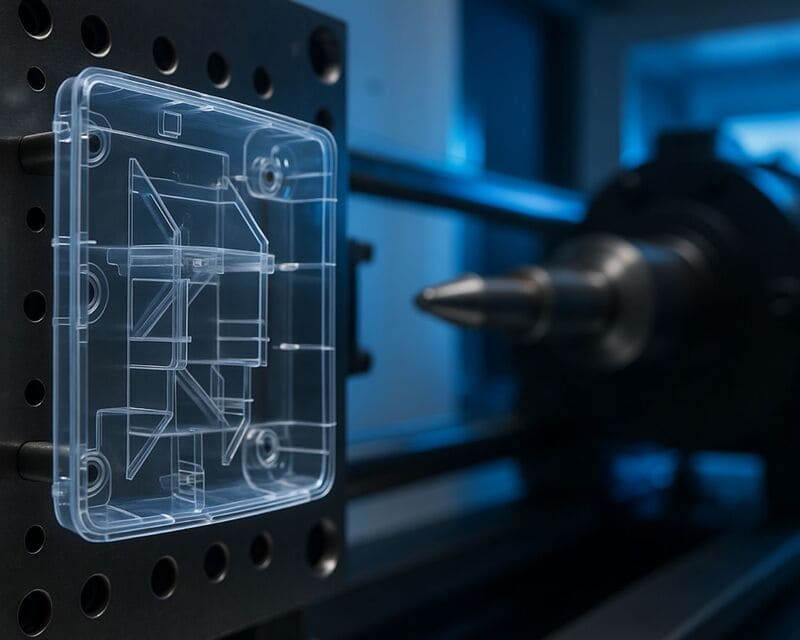
Plastic: The Unsung Backbone of Everyday Life
We often take plastic for granted, but it’s everywhere. It protects food and medicine, carries data through cables, supports life-saving medical devices, and keeps vehicles lighter and more efficient. Injection-molded parts are embedded in nearly every product we interact with—quietly shaping the way we live.
Unlike other materials, plastics are extremely adaptable. They can be engineered to be heat-resistant, flexible, transparent, or rigid. And thanks to injection molding, these materials can be shaped with incredible detail and consistency, over and over again.

The Process, Layer by Layer
Injection molding may look simple on the outside—but inside, it’s a precise coordination of temperature, pressure, speed, and mechanics. The process starts with plastic pellets that are heated in the machine’s barrel. This molten material is injected at high speed into a metal mold, where it rapidly cools and takes shape.
Molds can be complex tools with multiple cavities, sliders, and integrated cooling channels. The machines—like TOYO’s Series 7—control the entire process down to the millisecond. The result? High-speed production of perfectly repeatable, dimensionally accurate parts.

Types of Molded Parts
Injection-molded parts vary widely by industry, but the underlying process remains the same. The real difference lies in the materials, molds, and settings used to achieve different results.
Packaging
Medical
Logistics
Automotive
consumer goods
— get the full story
Download the brochure
Discover all the specs, features and technical details behind the 7 Series. Dive deeper into how each upgrade is designed to push your production further — and your business ahead.
Built with You, Built for the Future
find a certified agent near you